


 Diagnosis first
Display and sensor-area inspection
After diagnosis, ACPR may use display and sensor-area inspection when testing shows that path matches the a Samsung Galaxy phone symptom and physical condition.
A Galaxy fingerprint sensor can fail from protector fit, screen damage, settings, moisture, or sensor hardware. Get Anaheim repair help. ACPR checks the exact Galaxy model and observed behavior before explaining repair choices.
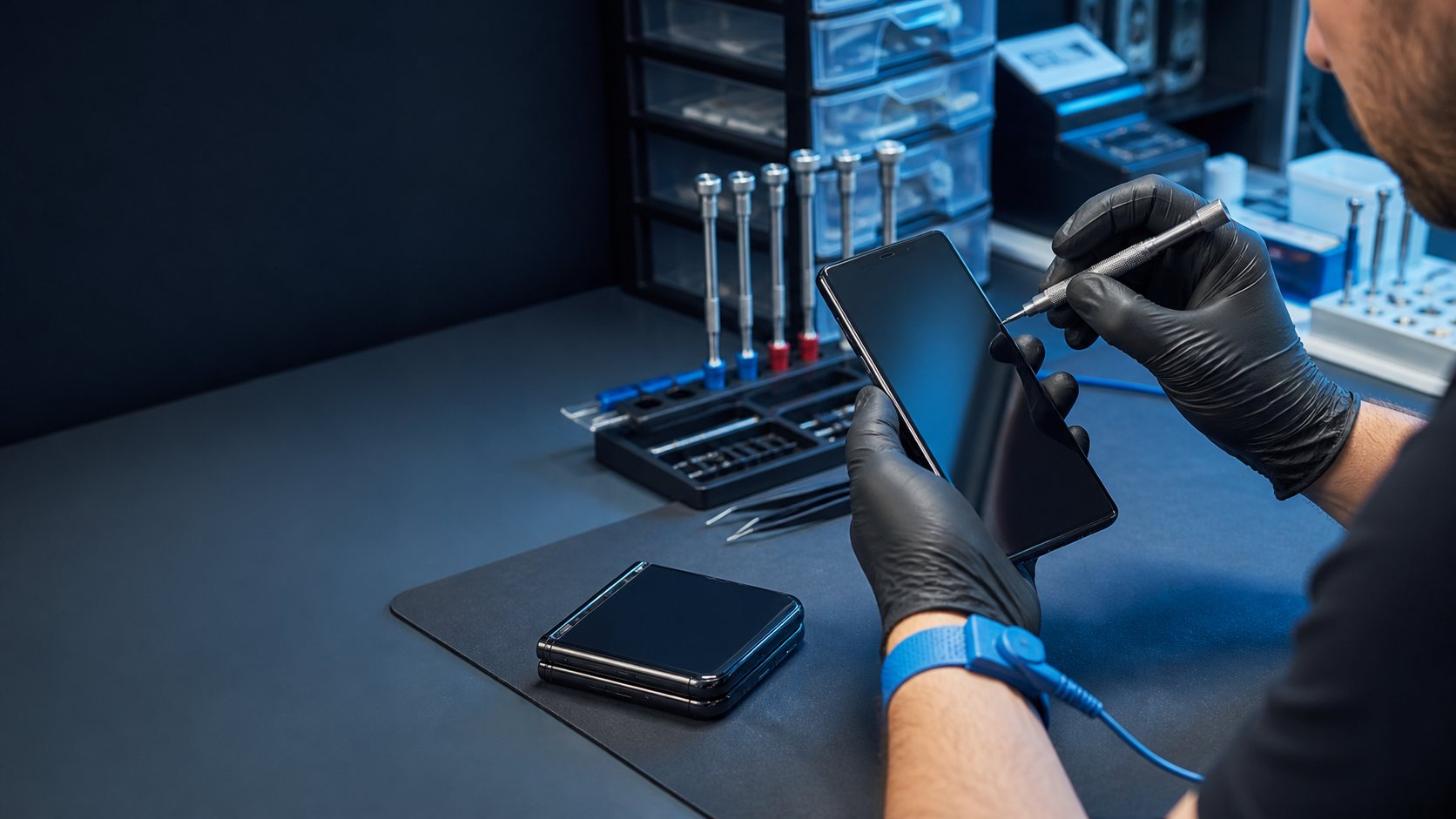
Recognition may fail after screen damage, work only at certain angles, reject every enrolled fingerprint, or stop after liquid or repair. On a Samsung Galaxy phone models, the exact pattern and what still works help separate a visible symptom from the part that actually needs service.
Use observations that protect the phone and make the in-store diagnosis more useful.
Clean the dry sensor area, remove a newly fitted incompatible protector when safe, review official setup, and test the passcode fallback. Record what happens, when it happens, and whether a known-good accessory changes it. Back up the phone while it is stable enough to use.
Do not share the passcode, repeatedly erase biometric settings without a backup plan, or assume a screen replacement guarantees biometric recovery. Do not open the phone, force connectors, erase it, or keep stress-testing a wet, swollen, unusually hot, or physically damaged device.
Bring the phone, its exact model information, and the cable or accessory involved when practical. Tell ACPR about impact, liquid, heat, updates, and previous repairs.
These are possible repair paths, not a diagnosis. ACPR tests the exact phone and explains which option fits before work begins.
After diagnosis, ACPR may use display and sensor-area inspection when testing shows that path matches the a Samsung Galaxy phone symptom and physical condition.
When the first component tests normally, related flex or sensor hardware assessment can help identify a connector, accessory, power, or related hardware issue without replacing parts by guesswork.
Connection and liquid-damage diagnosis may be appropriate when impact, liquid, corrosion, or a deeper electrical fault is involved. ACPR explains practical limits before work begins.
ACPR checks the exact Samsung Galaxy model, including Galaxy S, A, and Note families as well as Z Flip and Z Fold devices. OLED, frame, port, hinge, and biometric layouts differ across models.
Obstruction, settings, screen protector fit, damaged display or sensor hardware, flex connections, liquid, or prior repair can affect biometrics. The symptom alone does not confirm one failed part, which is why model and device testing matter.
Clean the dry sensor area, remove a newly fitted incompatible protector when safe, review official setup, and test the passcode fallback. Stop using it if there is swelling, unusual heat, odor, smoke, exposed sharp glass, or recent liquid exposure.
Depending on the diagnosis, possible paths include display and sensor-area inspection, related flex or sensor hardware assessment, connection and liquid-damage diagnosis. The exact recommendation depends on the model and condition.
Call, text the symptom, get directions, or reserve a repair time with the exact model and what changed.

 Book a repair